Amsterdam Photoshoot in the Rain: What Happens and Why It Can Work
Rain is normal in Amsterdam. Here is how rescheduling usually works, where photographers go to stay dry, and why a light drizzle can improve your photos.
By the TulipFrame team · · 5 min read
The short answer
If it rains on your Amsterdam photoshoot, most photographers either shoot anyway using umbrellas and covered spots, or move the session to another time. Rescheduling rules vary by photographer and are agreed in your quote, so check them before booking. Light rain often helps: wet cobbles reflect light, streets empty and colours look richer.
Amsterdam gets rain in every month, but it is usually showers rather than all-day downpours. Many sessions go ahead in drizzle, and some of the most atmospheric Amsterdam photos are taken on wet evenings. What matters is agreeing in advance what happens if the forecast turns.
What usually happens when rain is forecast
There is no single rule. Each photographer sets their own weather policy, and on TulipFrame it is written into the quote you accept, so you know before you book. Common approaches:
- Shoot in light rain, reschedule in heavy rain or strong wind. The most common. "Heavy" is a judgement call, usually made together the evening before or a few hours ahead.
- Move the time on the same day. Dutch showers often pass within an hour. Shifting from 10:00 to 13:00 can be enough.
- Reschedule to another day at no charge, if both sides have availability. For tourists leaving the next morning, this is not always possible, so tell your photographer your last free day.
- Proposals: the plan usually includes a covered backup spot from the start, because the date matters more than the weather.
Ask your photographer: How late can we decide? Is a reschedule free? What happens if I cannot reschedule before I fly home? These are normal questions.
Look at the hourly radar (Buienradar is what most Dutch people check) rather than a daily icon. A "rain" symbol on a daily forecast often means a 40-minute shower.
Why rain can make better photos
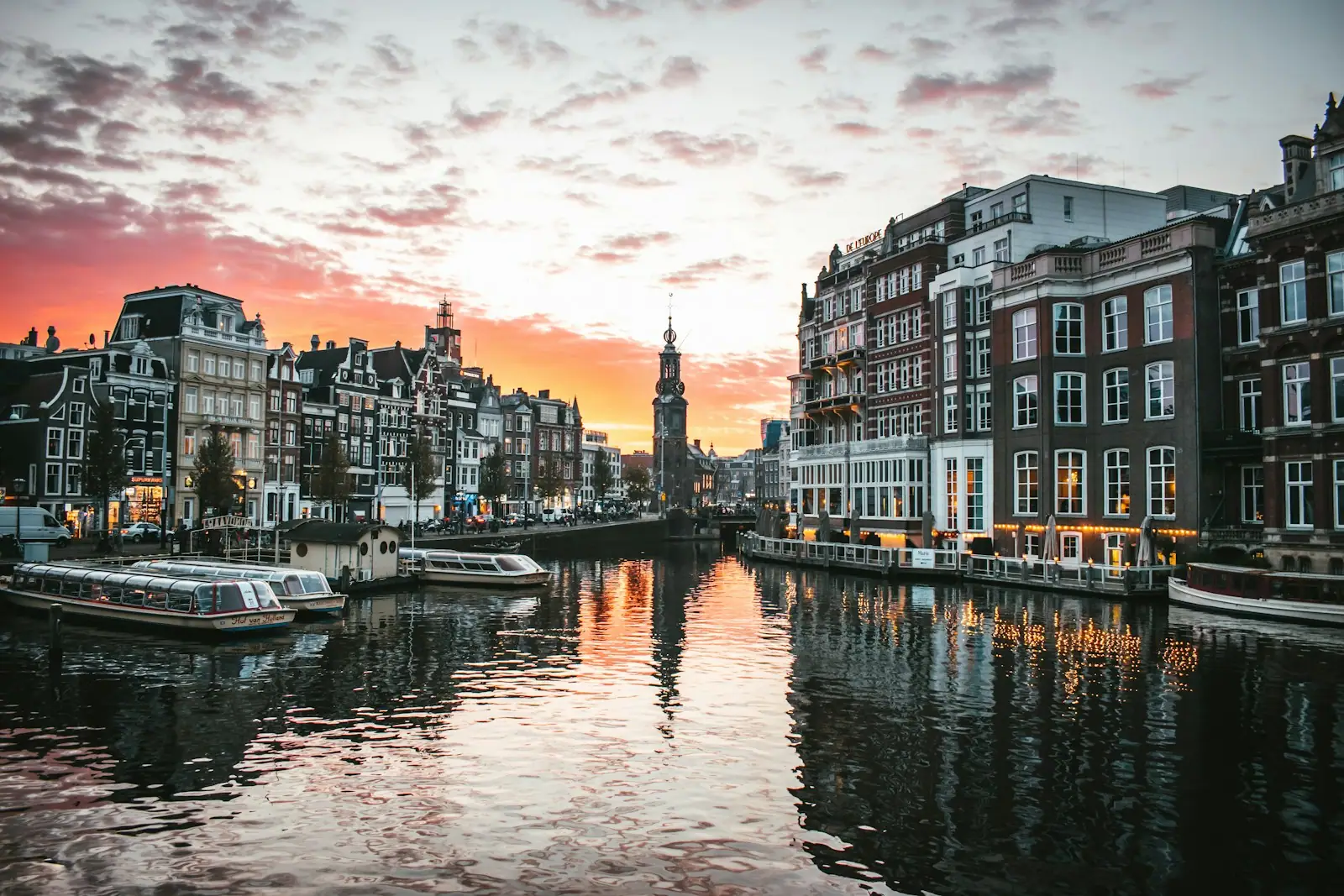
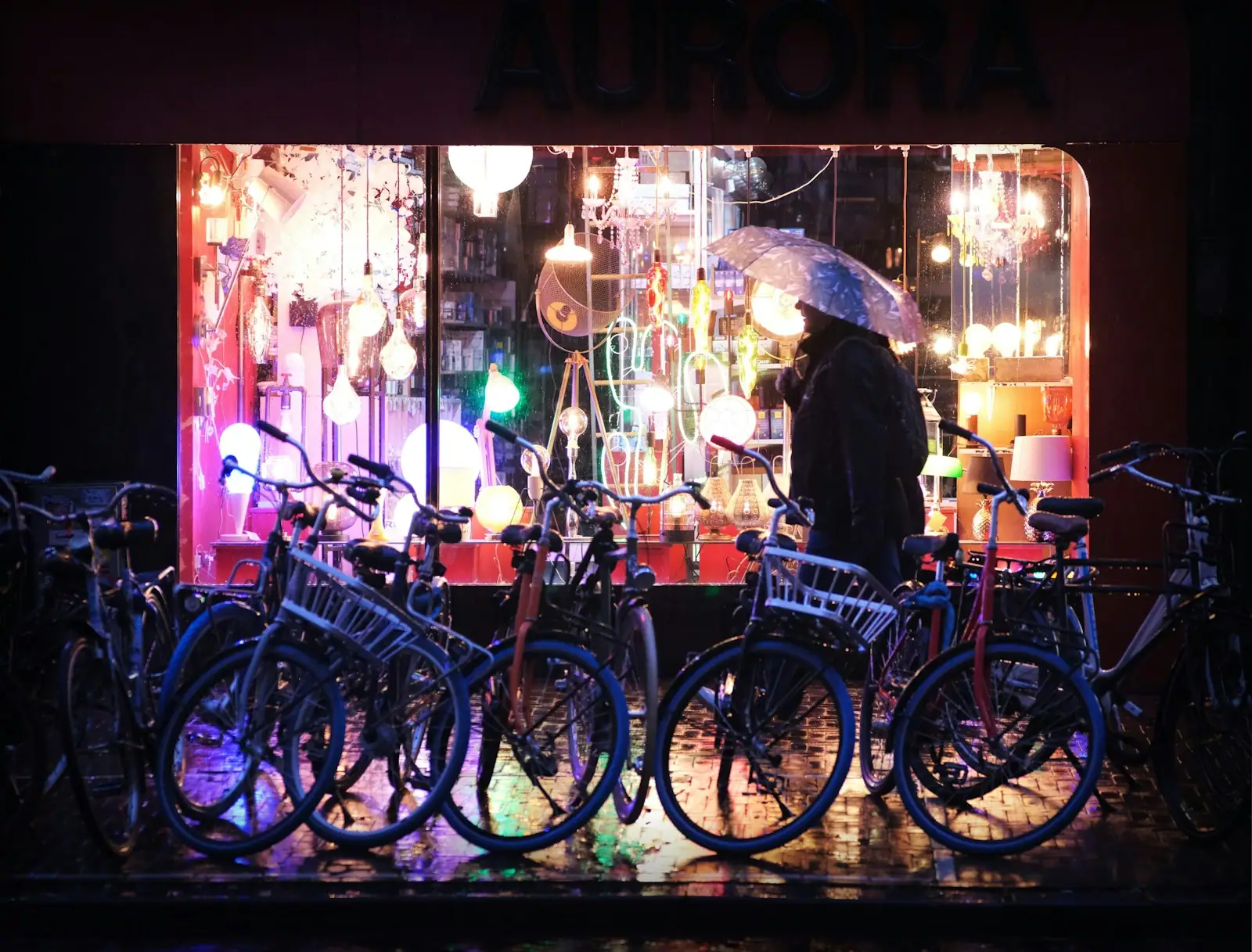
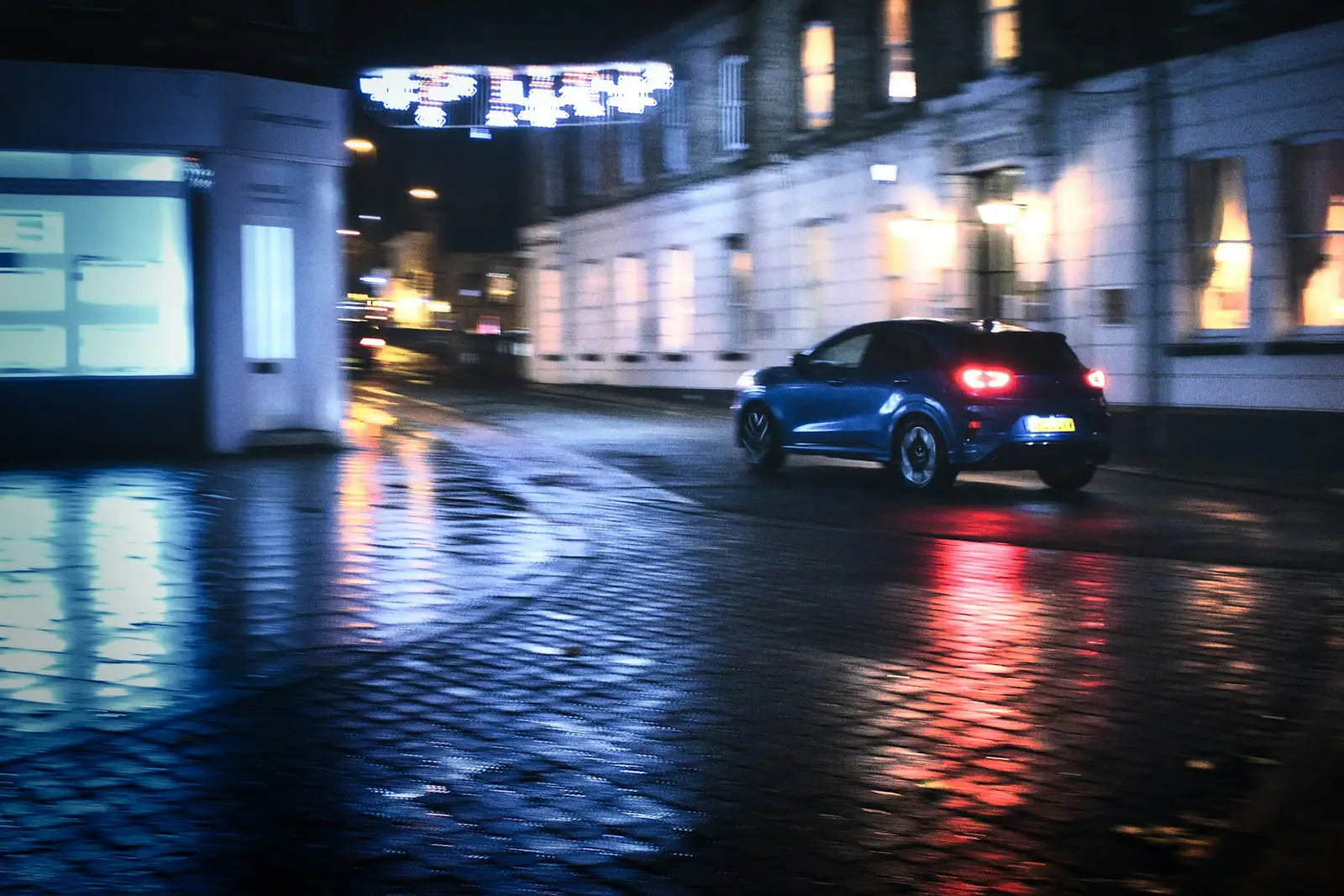
- Reflections. Wet cobbles and bricks mirror streetlights, shop windows and bridge lamps. At blue hour this looks cinematic.
- Empty streets. Tour groups thin out quickly when it rains; the Jordaan becomes quiet.
- Soft light. Overcast skies remove harsh shadows, and skin looks even.
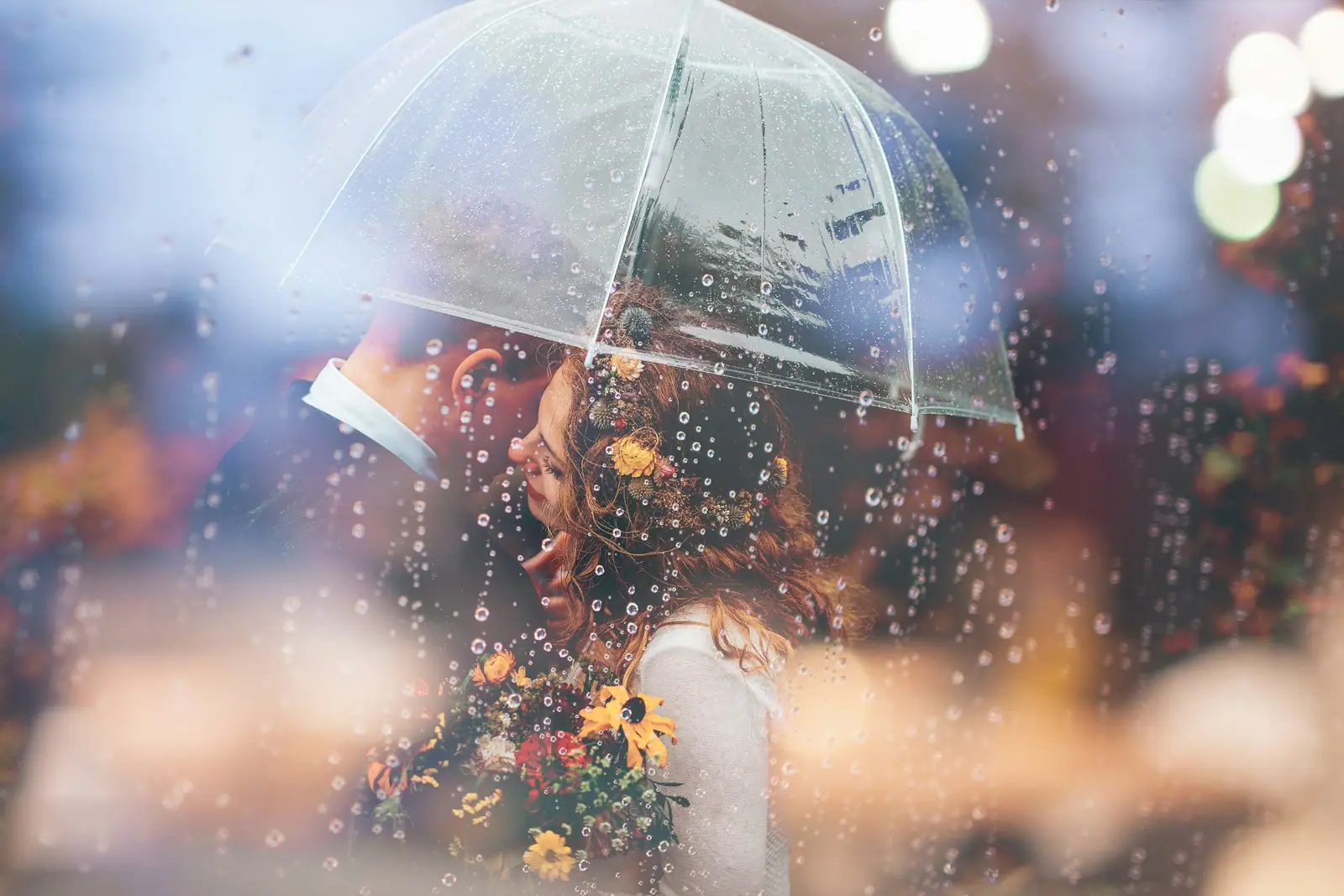
- Umbrellas. A clear dome umbrella lets light onto faces and gives couples a reason to stand close. A classic black umbrella suits more formal portraits.
- Mood. Amsterdam in the rain looks like Amsterdam. Guests often say those are the photos they end up framing.
Covered and sheltered spots
Rijksmuseum passage
The arched passage running under the Rijksmuseum, between the Museumplein side and the Stadhouderskade, is the best-known covered spot in the city. It has tiled walls, vaulted ceilings and often a busker whose music echoes through it.
The catch: it is a busy cycle path. Cyclists ride through fast in both directions, with pedestrians confined to the sides. Photographers shoot from the edges, choose quieter moments and never pose people in the cycle lane. Early mornings are calmest. It is a public passage rather than a studio, so expect people around you.
Cuyperspassage at Centraal Station
The pedestrian and cycle tunnel under Amsterdam Centraal, towards the IJ ferries, is lined with blue-and-white tile tableaux. Pedestrians and cyclists have separate lanes here, which makes it easier than the Rijksmuseum passage. The station itself is busy and has its own rules on professional photography, so keep it brief and low-key, and ask your photographer how they usually handle it.
Oudemanhuispoort
A covered passage between Oudezijds Achterburgwal and Kloveniersburgwal, part of the University of Amsterdam, with second-hand book stalls on many weekdays. Quiet, warm-toned and very Amsterdam.
Arcades, gateways and doorways
Canal-house doorways, the overhangs of bridges and shopfront canopies give just enough cover for a couple standing close. Your photographer shoots from the rain with a covered lens; you stay mostly dry.
Café interiors
A brown café with dark wood, candles and steamed-up windows is a natural rainy-day backdrop. Ask permission first and buy a drink: cafés are private businesses, and some do not allow cameras at busy times. Mid-morning on a weekday is when owners are most relaxed about it.
How to prepare
- Wear shoes that tolerate puddles and a coat that looks good on its own, because it may stay on. See what to wear.
- Bring or buy a clear or neutral umbrella. Avoid bright branded ones.
- Leave hair a little loose: humidity will do its own thing, so a style that tolerates frizz looks better than one that fights it.
- Keep your schedule flexible for the first couple of days of your trip, so a washed-out day can be swapped.
A typical rainy-day route
Photographers who know the city tend to plan a route that hops between cover rather than standing in one spot. A 60-minute wet session might look like this:
- Start under the Rijksmuseum passage while the rain is heaviest, working from the sides.
- Walk through the museum gardens and along the Spiegelgracht towards the canal belt, pausing under shop canopies in the antiques quarter.
- Use the bridges over the Prinsengracht for umbrella shots with reflections on the wet road.
- Finish in a café for warm, candle-lit frames.
Other routes use the Cuyperspassage and the IJ ferry, or the Oudemanhuispoort and the old centre around the Oudezijds canals. Your photographer will choose based on your style; more ideas in our Amsterdam photoshoot locations guide.
Which months are wettest?
Rain is spread across the year, but autumn and early winter, roughly October to December, tend to be the wettest and windiest, while spring is often drier with sharper showers. Summer brings fewer rainy days but occasional heavy thunderstorms in the afternoon. In practice, any month can give you a dry session or a wet one, which is why a weather plan matters more than the month. For the cold months, see the winter guide.
When to call it off
Heavy wind is the real problem, more than rain: umbrellas turn inside out and hair ends up everywhere. Strong gusts are also a safety issue on bridges and near canal edges. Trust your photographer's judgement here. If the date is fixed, such as a surprise proposal booked through an Amsterdam proposal photographer, plan the covered backup together from the start.
For which months are wettest and when the light is best, see the best time for a photoshoot in Amsterdam.
Questions
Will my photoshoot be cancelled if it rains?
Not automatically. Many sessions go ahead in light rain. Each photographer sets their own weather policy, including whether rescheduling is free, and on TulipFrame that policy is part of the quote you accept.
Can we shoot in the Rijksmuseum passage?
Many photographers use it as a covered spot, but it is a busy public cycle path. You stand at the sides, never in the cycle lane, and expect cyclists and passers-by. Early morning is quietest.
Is rain or wind worse for photos?
Wind, usually. Light rain adds reflections and empties streets; strong wind ruins hair, flips umbrellas and makes bridges uncomfortable. Photographers are more likely to move a session for wind than for drizzle.
What if I leave Amsterdam the next day?
Tell your photographer your travel dates when you book. The usual options are moving the time on the same day, using covered locations, or shooting in light rain. Book early in your trip if you can.
Are clear umbrellas better for photos?
Usually. A clear dome umbrella lets light reach faces and keeps the background visible. A plain black umbrella also works for a classic look.